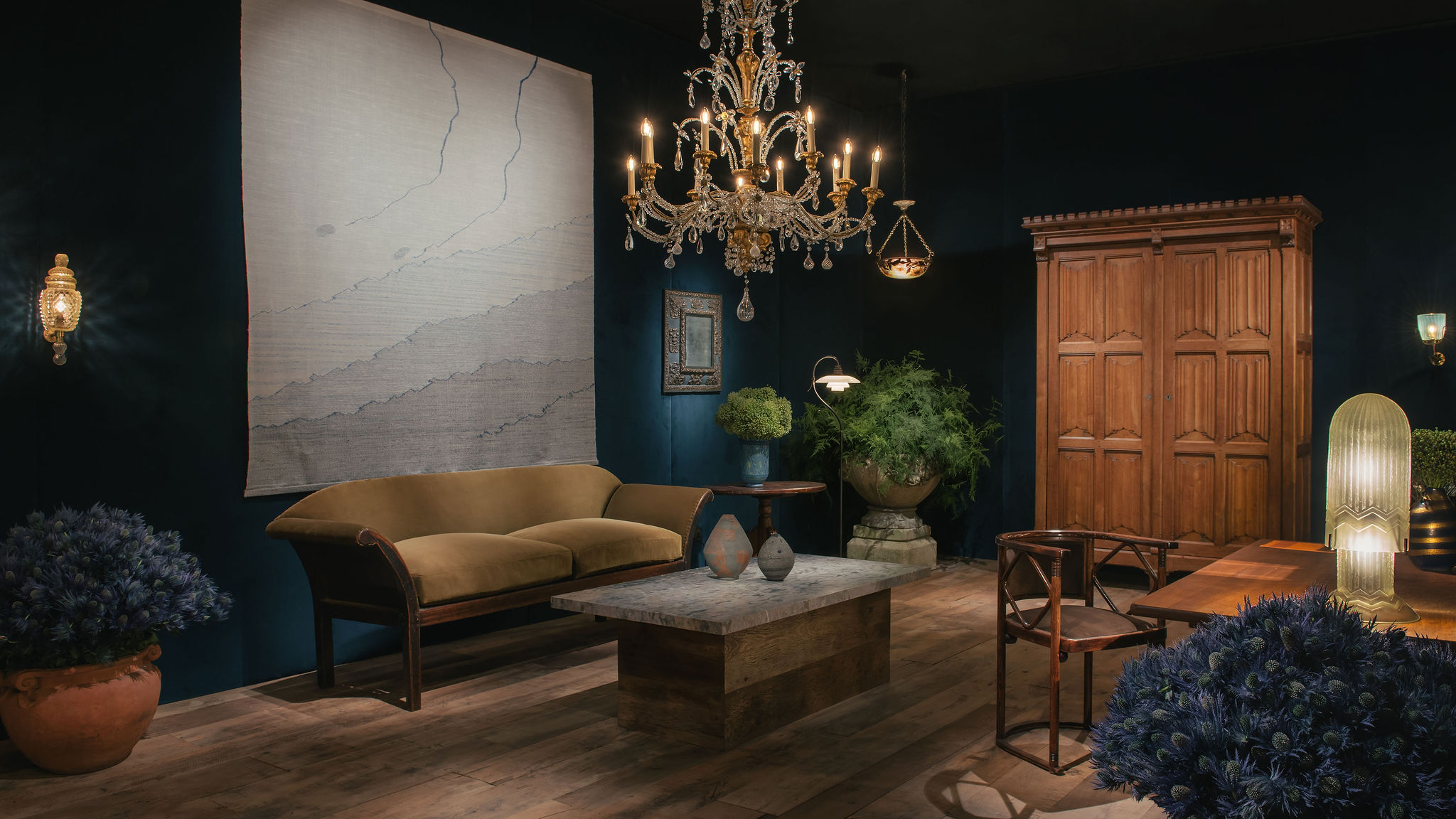
THE TREASURE HOUSE FAIR 2026 - COLLECTION
This June, for Treasure House Fair, Rose Uniacke presented a curated collection conceived as a gentle meditation on the colour blue - its history, its particular aesthetic quality and the symbolism that it has acquired over the years since its first known use in art and antiques.
The blue of the sky, the blue of the sea, the purest and most tranquil colour in nature’s palette, has always been the rarest and most expensive to produce, for which reason indigo came to be known as ‘Blue gold’ in the 17th and 18th centuries. And before indigo, there was ultramarine - even rarer, even more coveted, even more expensive.
Ultramarine, which means literally ‘from beyond the sea’, was both extremely costly to source and extremely difficult to produce. It was made from lapis lazuli, a semi-precious stone mined in Afghanistan and traded, by sea, with Ancient Egypt. So, although it was the most brilliant, high quality and most stable blue, its scarcity and extravagant cost shaped how it was used. Reserved, in the Renaissance, only for the Virgin Mary’s robes, it came to symbolise beyond-earthly power, truth, majesty, and infinite purity.
These qualities, the rarity, beauty and artistry of blue in all its different forms and expressions, were explored and played on in Rose Uniacke’s exquisite collection for this year’s stand at the Treasure House Fair.
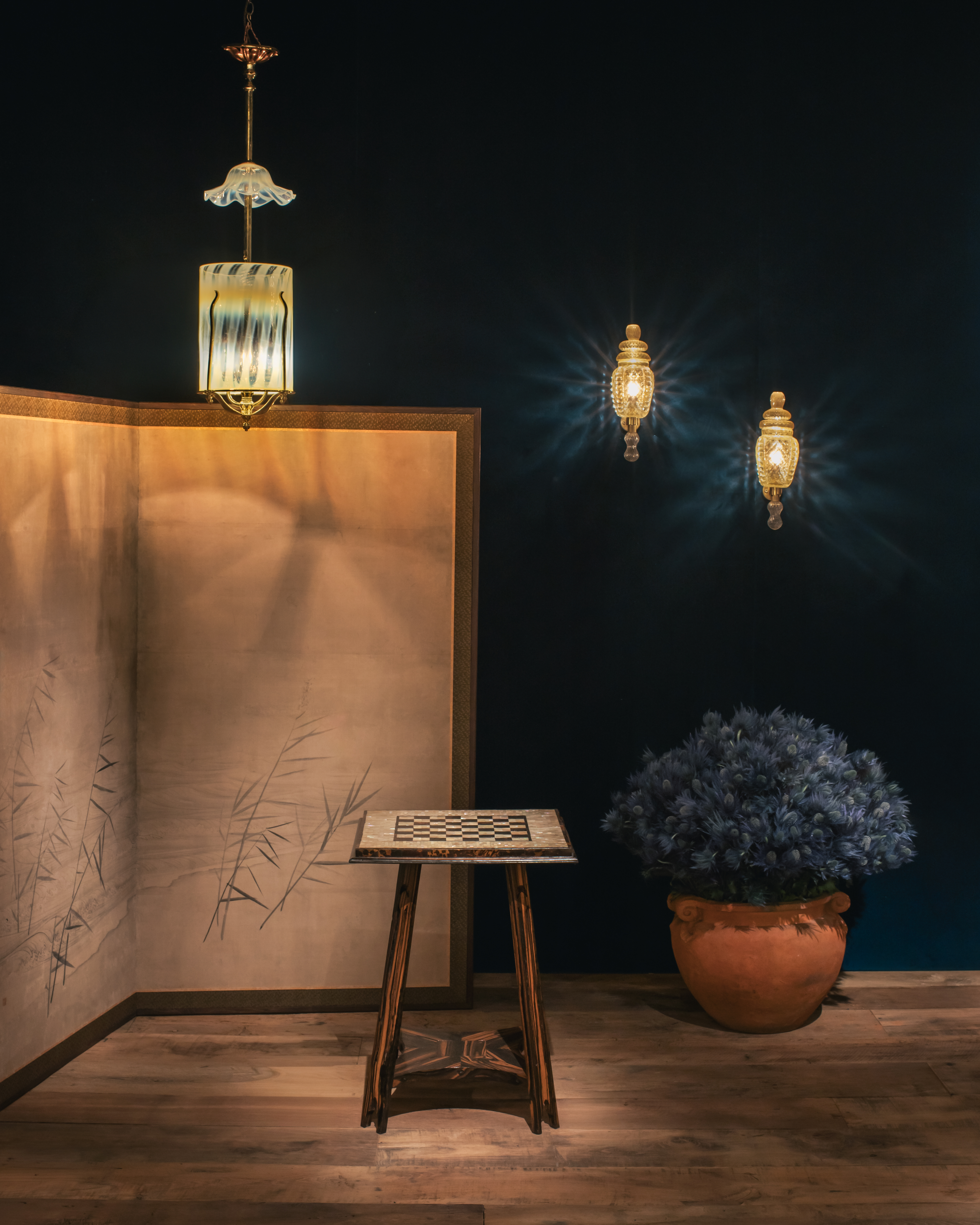
A highlight of the stand was the exceptional table, whose blue and green marble top is inlaid with daisies and a micro mosaic of Pliny’s ‘Doves’, attributed to the Roman mosaicist Giacomo Raffaelli. The original, recorded by the ancient historian Pliny, was taken from Hadrian’s Villa in 1737 and subsequently much copied. It is a piece of rare distinction and charm, standing on a bespoke bronze base.
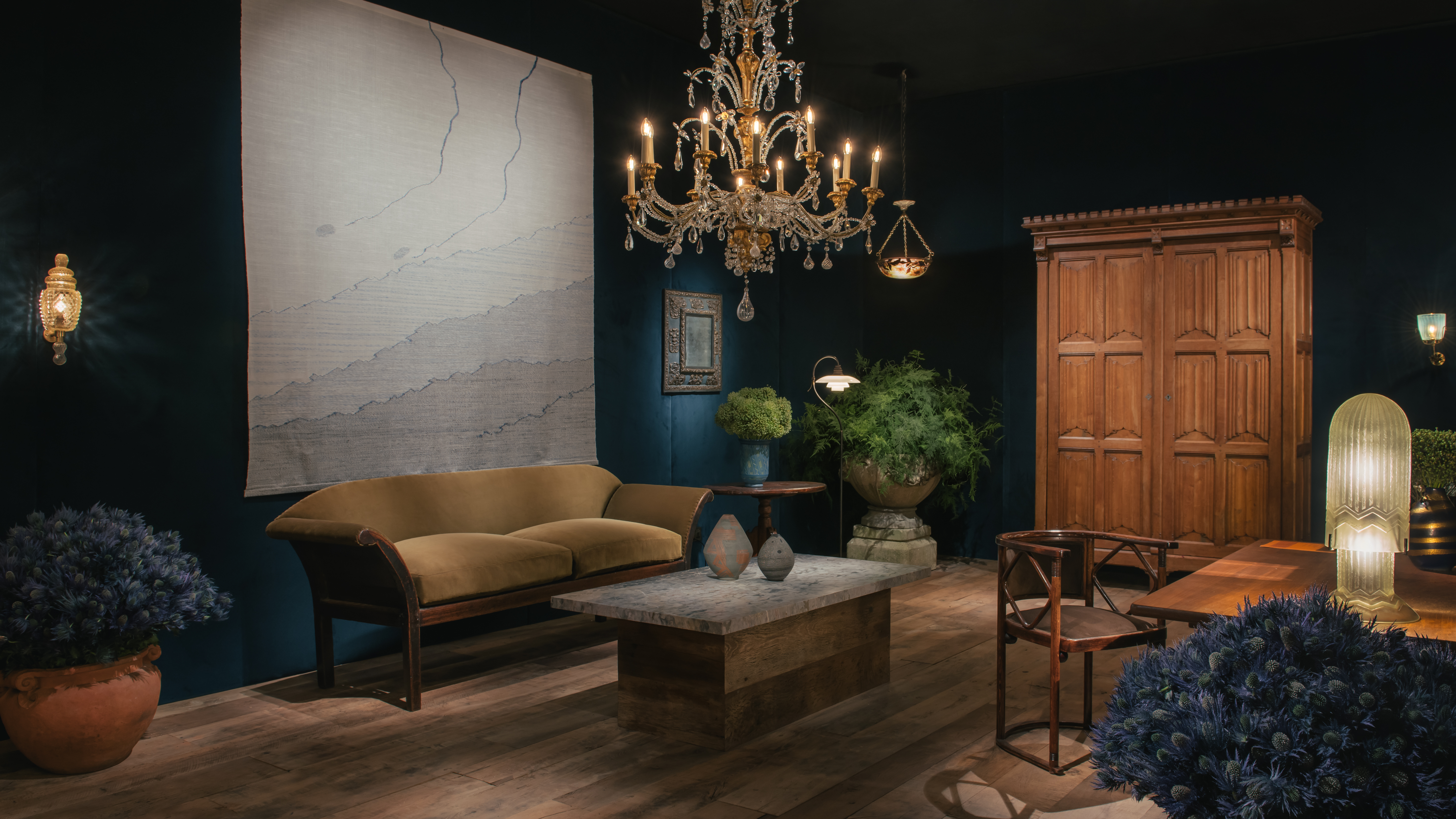
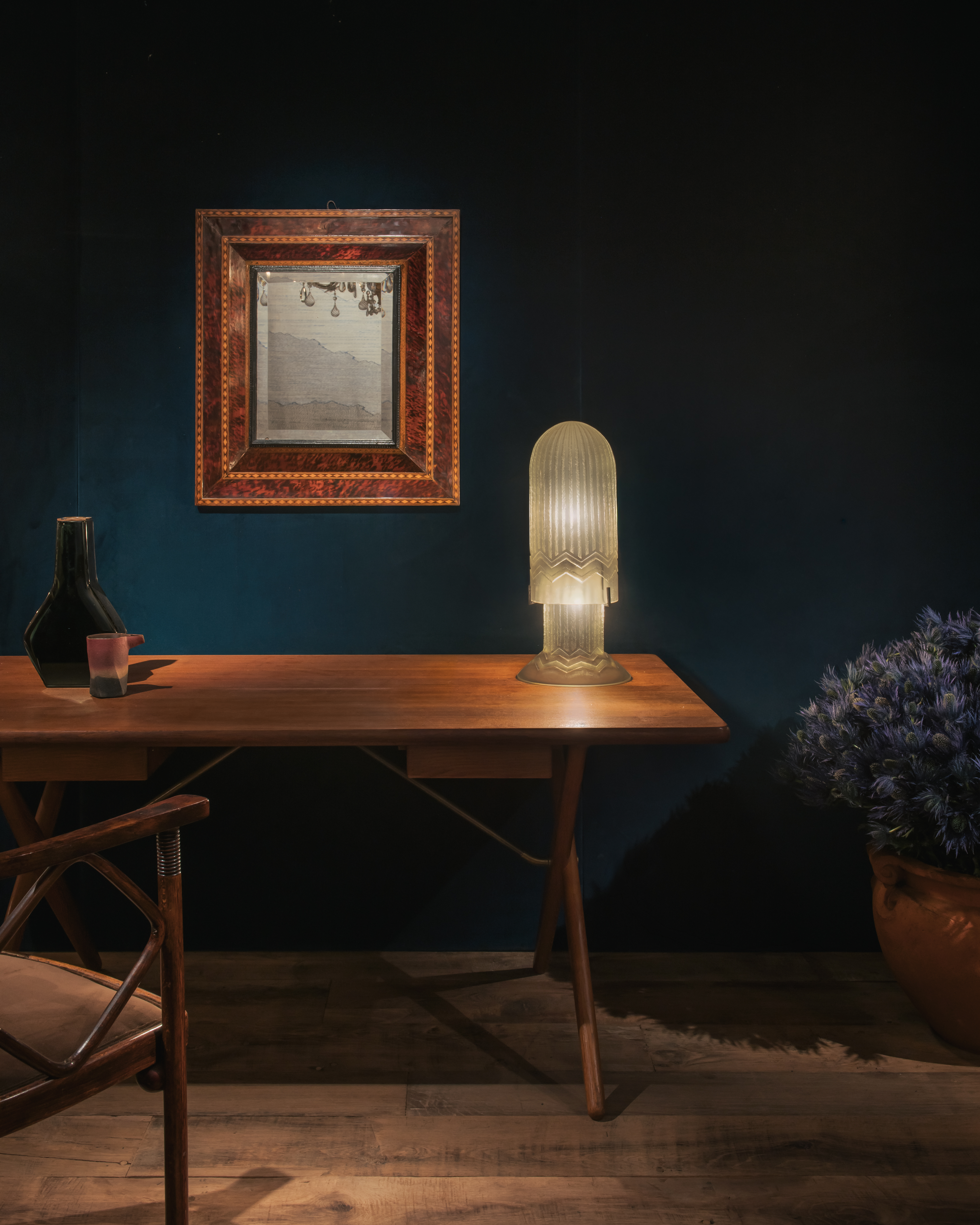
Behind it, on walls upholstered in rich Heavy Weight Cotton Velvet in ‘Bilberry’ from Rose Uniacke’s own fabric line, was a 17th century cushion-frame French mirror with unusual blue painted decoration, highlighted with pewter repoussé plate work. In playful contrast, on either side of the mirror, were a pair of delicate 1950’s blue glass wall sconces, produced by Fontana Arte. Slim, bluebell-coloured, conical, satin-glass shades rose out of simple brass holders.
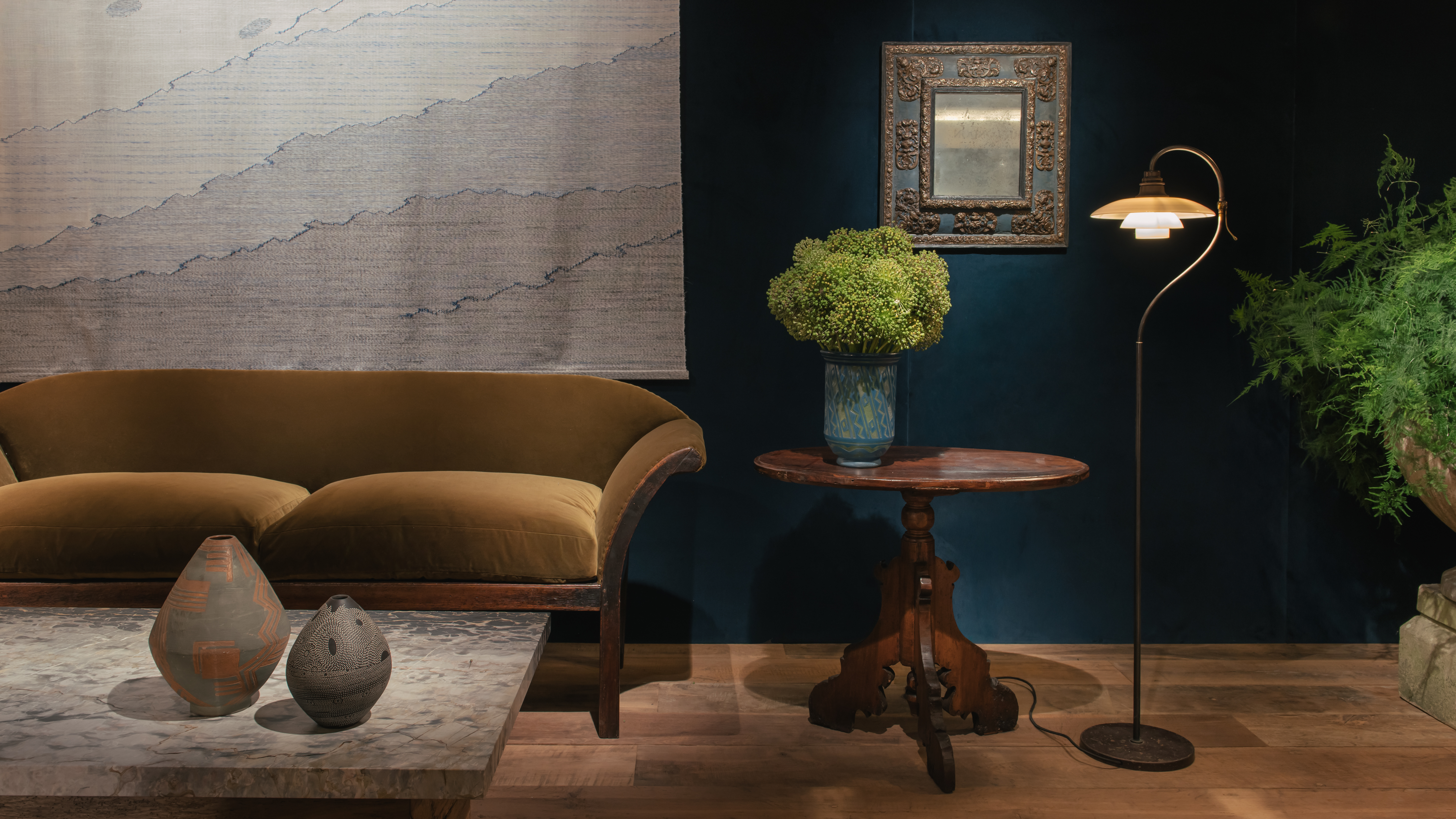
Above, hanging from the ceiling was an Emile Gallé Plafonnier made of multi-layered glass, with an amber and russet peppervine motif acid etched against a grey-white background, along with an exquisite 18th century Genoese chandelier from whose twelve carved and gilded arms dangled crystal and glass stars and flowers.
A simpler, cleaner aesthetic was expressed in the rare Hans Wegner ‘Sawhorse’ desk, made and marked by Andreas Tuck. This free-standing 'architect's' desk has a plain teak top and solid oak cross pin (or Sawhorse) frame with brass stretcher and two drawers. Its quiet simplicity and modernity offset the complexity of the chandelier and spoke to the restraint of the Simone Prouvé wall-hanging, a tapestry whose cool horizontals are woven in fibreglass, copper and stainless steel.
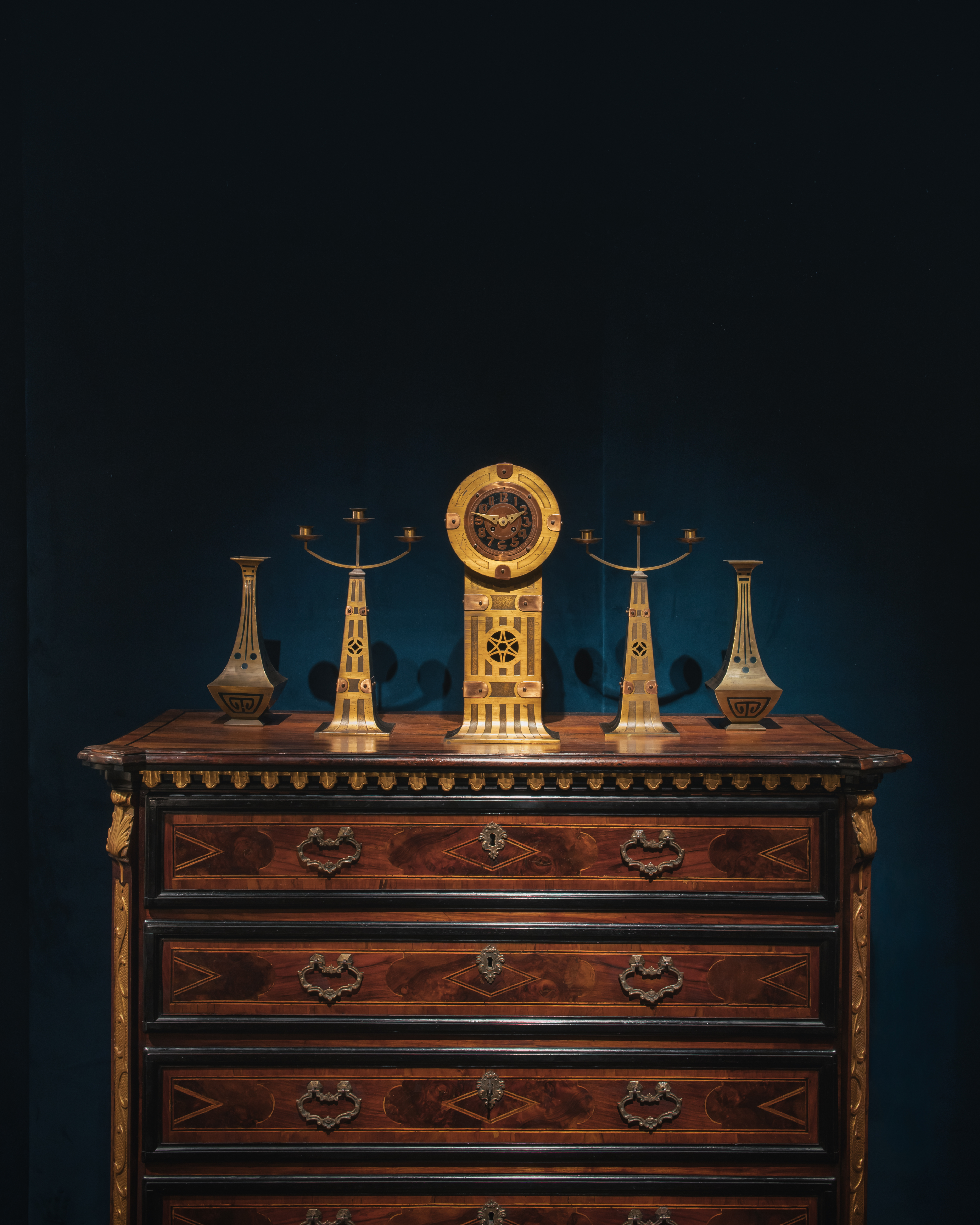
As always with Rose Uniacke’s curations, the objects enhanced and enlivened each other, creating a gently flowing conversation between different shades and qualities of blue, across long stretches of time, where the constant feature is rare, artisanal, craftsmanship, harmony and exquisite quality.
The Treasure House Fair, Royal Hospital Chelsea, South Grounds, London, SW3 4SR
Wednesday 24th June - Tuesday 30th June